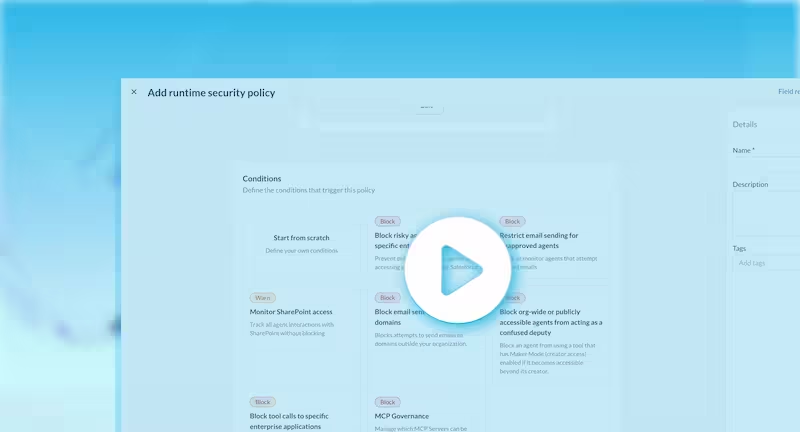
Obsidian Security monitors every AI agent, every action, and every MCP server interaction at runtime; without a SaaS connector for every tool you run.
AI agents are deploying faster than any team can track. They chain tasks across SaaS apps, inherit OAuth privileges built for humans, and act autonomously in environments security teams have no visibility into. Static configuration tells you what an agent is permitted to do. It does not tell you what the agent actually did, what tool it called, or which MCP server it touched in the last sixty seconds.
AI agent monitoring requires runtime context. Configurations drift, posture changes, and connector-by-connector audits cannot keep pace with autonomous agents that act in seconds and span multiple AI platforms. Obsidian Security hooks directly into AI platforms so security teams see what agents actually do, the moment they do it, across Copilot, Claude, Cursor, and the SaaS apps agents touch.
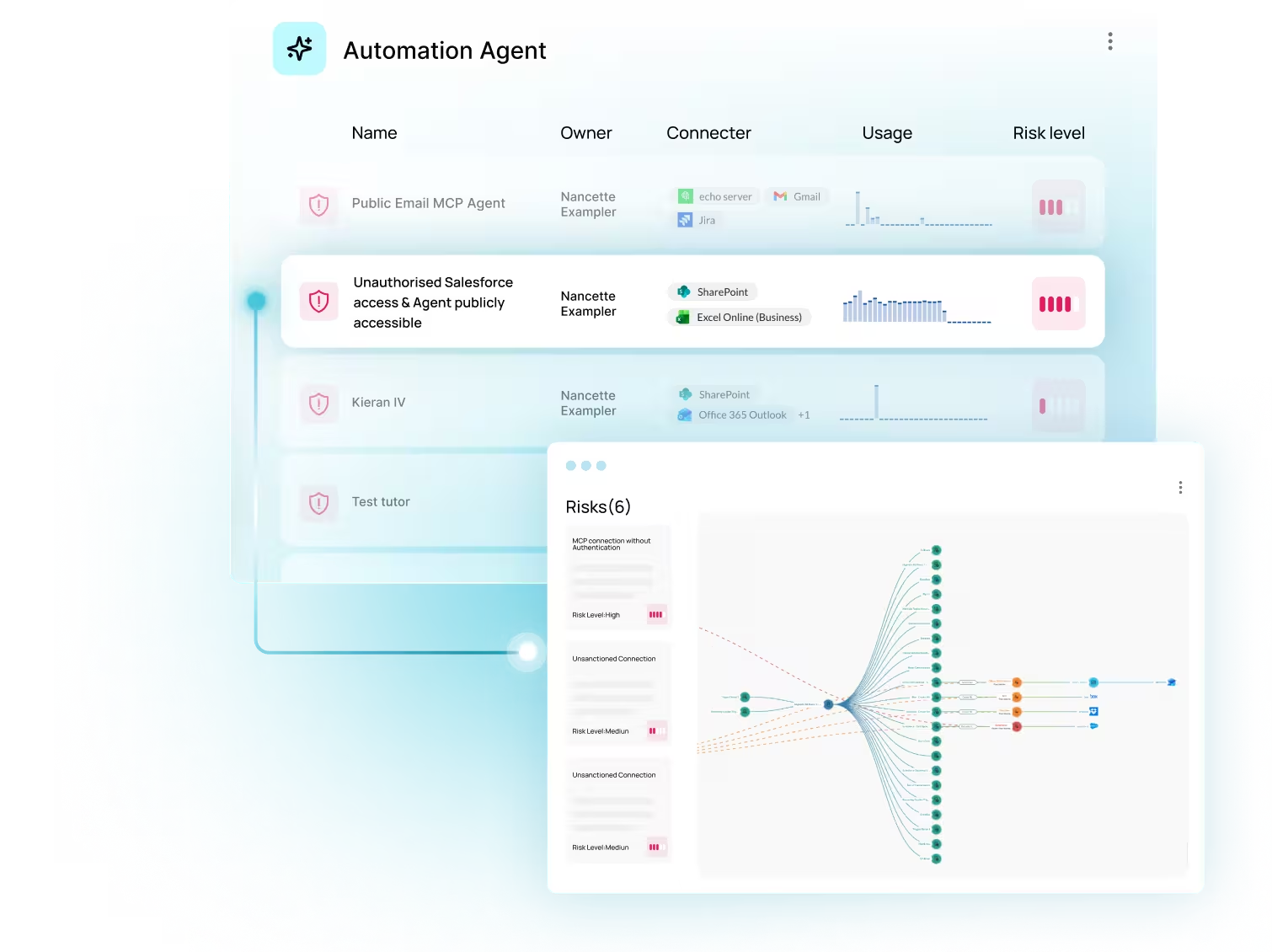
Obsidian Security connects directly into AI platforms to build a complete inventory of every agent in your environment — the ones you provisioned, the ones business users built, and the ones nobody knew existed. The dashboard surfaces who built each agent, what SaaS it touches, what privileges it holds, and every action it has taken. Customers have discovered hundreds of agents on their first day with Obsidian — including 377 Copilot agents at one enterprise that were entirely outside IT's view.
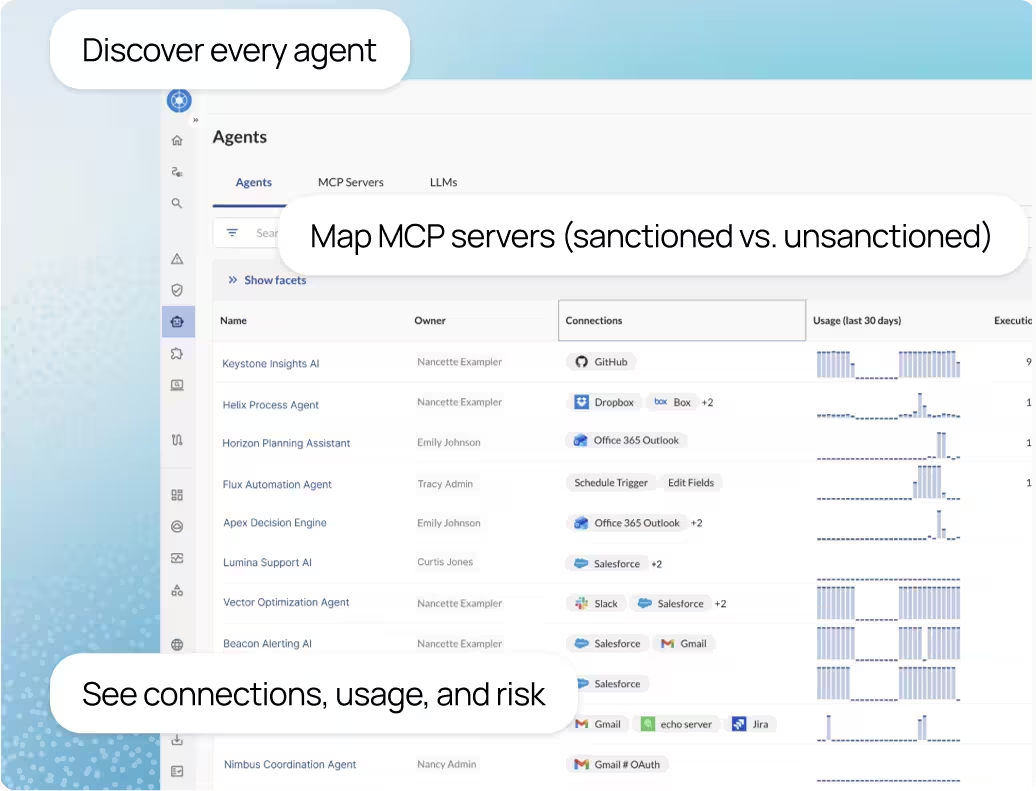
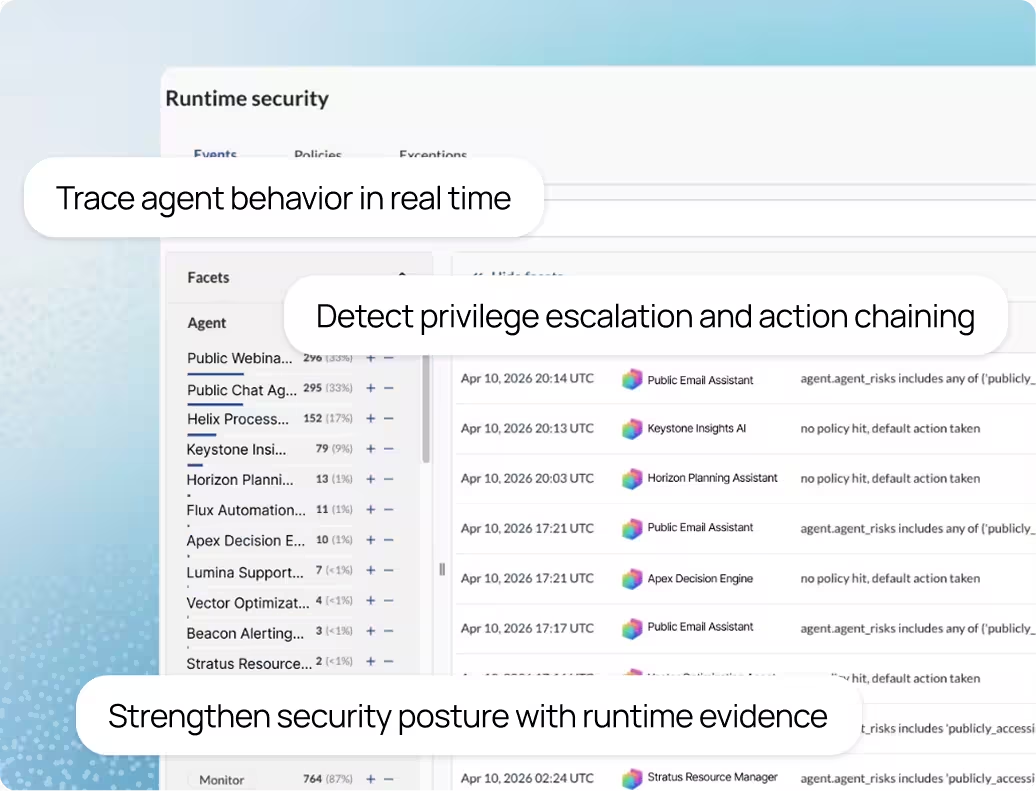
Obsidian connects agent identity, SaaS entitlements, and live runtime activity into a single, always-current view. Security teams see what agents actually do — every tool call, every MCP server interaction, every cross-app action — and trace each event back to the human or service identity that authorized it. Configuration tells you what an agent could do. Runtime tells you what it did.
Native AI platform monitoring locks you into one vendor at a time. Obsidian provides one control plane across Copilot, Claude, Cursor, and the SaaS apps your agents touch. Investigate alerts, enforce policy, and report on agent activity across the full stack without standing up a separate program for each platform.
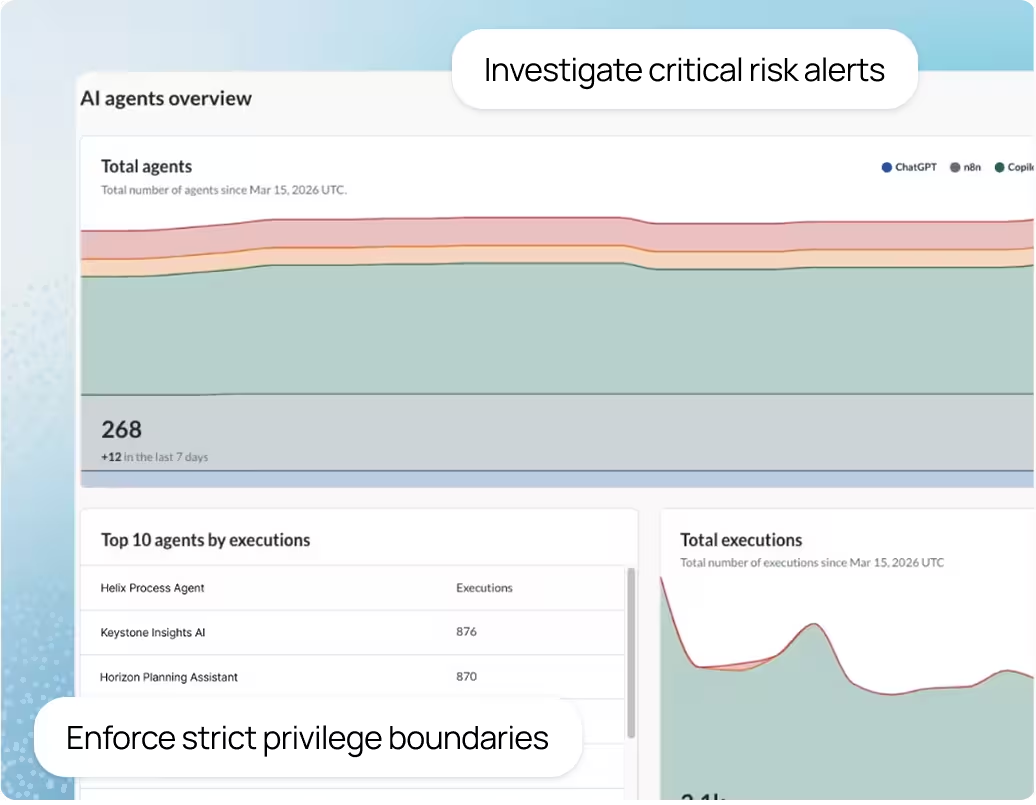
AI agent monitoring is the continuous observation of autonomous AI agents (their identities, privileges, tool calls, MCP server interactions, and cross-platform actions) at runtime. Unlike traditional posture management, AI agent monitoring captures what agents actually do, in the moment they do it, rather than what they are configured to do.
Observability tells you what an agent did: the trace, the latency, the model output. Security monitoring tells you what the agent was allowed to do, whether it stayed inside policy, and whether its behavior matched its declared identity. Obsidian focuses on the second question: monitoring AI agents as a security and access problem, not an application performance problem.
Audit logs are messy, siloed across every AI platform an enterprise runs, and arrive too late to stop misuse. They also do not capture what happens inside the tools agents connect into: the actual service accounts an agent invoked, the permissions it was passed, and the data it touched. Those interactions only exist at runtime.
No. Obsidian's runtime monitoring is connector-free for the agentic layer. We hook directly into AI platforms (Copilot, Claude, Cursor, and others) via APIs. While additional SaaS connectors deepen the picture for specific use cases like privilege correlation against Salesforce or Google Workspace, you can deploy AI agent monitoring without standing up SaaS integrations across every tool first.
Obsidian inventories every MCP server connected to your AI platforms to help you classify which are sanctioned or unsanctioned. It also surfaces shadow agents (agents created by business users without IT approval) through native platform connectors and a browser extension that detects AI activity in environments where security previously could not reach.
Obsidian sees every MCP server connected to your agent platforms. The agents associated with that MCP, and how often they ran.
Yes. Runtime guardrails (enforcement that cuts off agent action before damage is done) are rolling out across AI platforms over 2026. Talk to our team for the current enforcement coverage on the platforms you run.
No. Obsidian monitors at the platform layer. There is no proxy in the data path, no gateway to operate, and no agent SDK to install. Coding agents in Claude Code, Cursor, and Copilot continue to operate at full speed, and security teams gain visibility without interfering with developer workflows.

Discover how Obsidian governs and secures SaaS-embedded AI agents without slowing innovation.