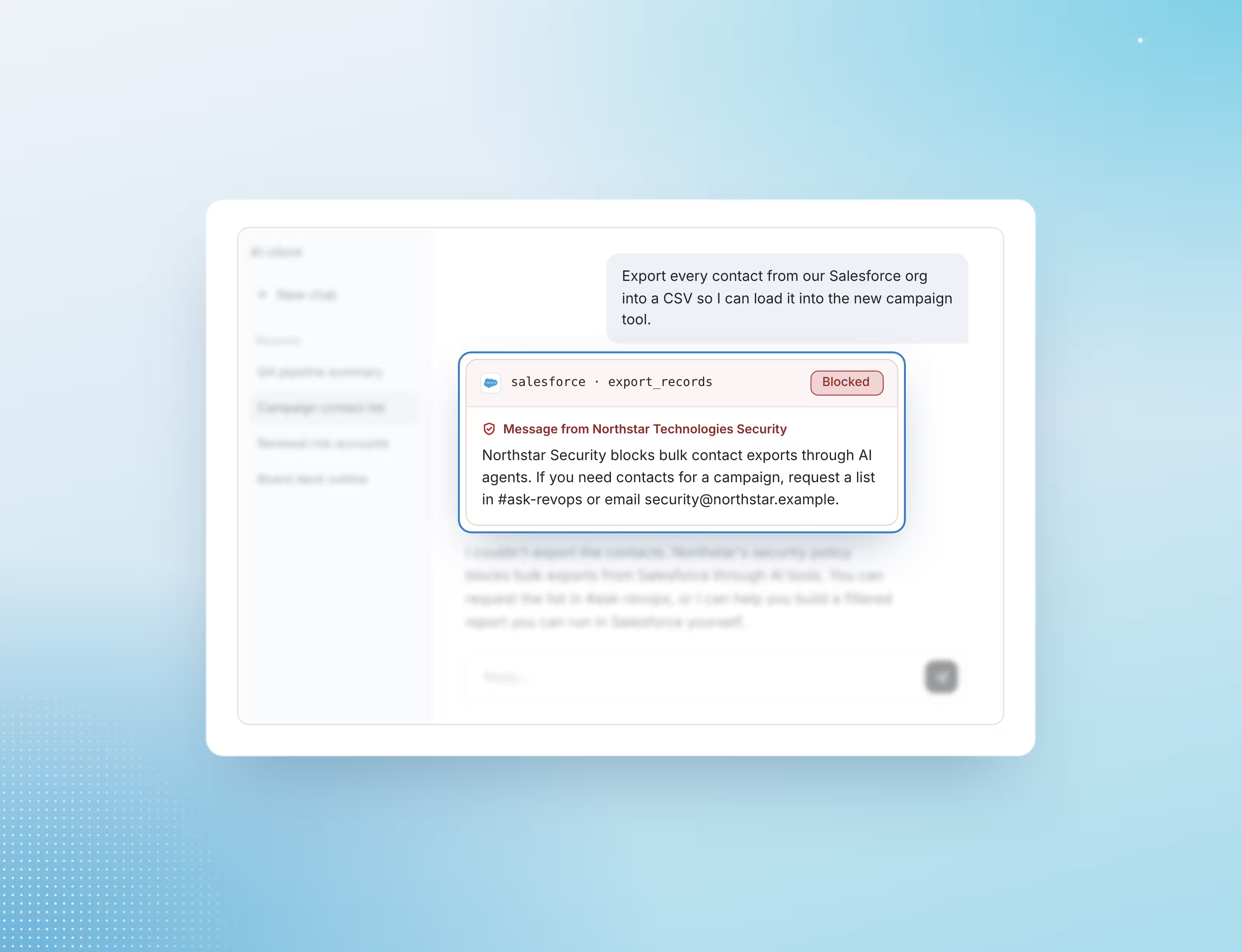
Just one prompt can confuse an agent. Stop high-risk actions before they happen with flexible guardrails that fire at runtime.
New Runtime policy now covers Codex, the MCP Security Proxy, and the gateways your platform team already runs.
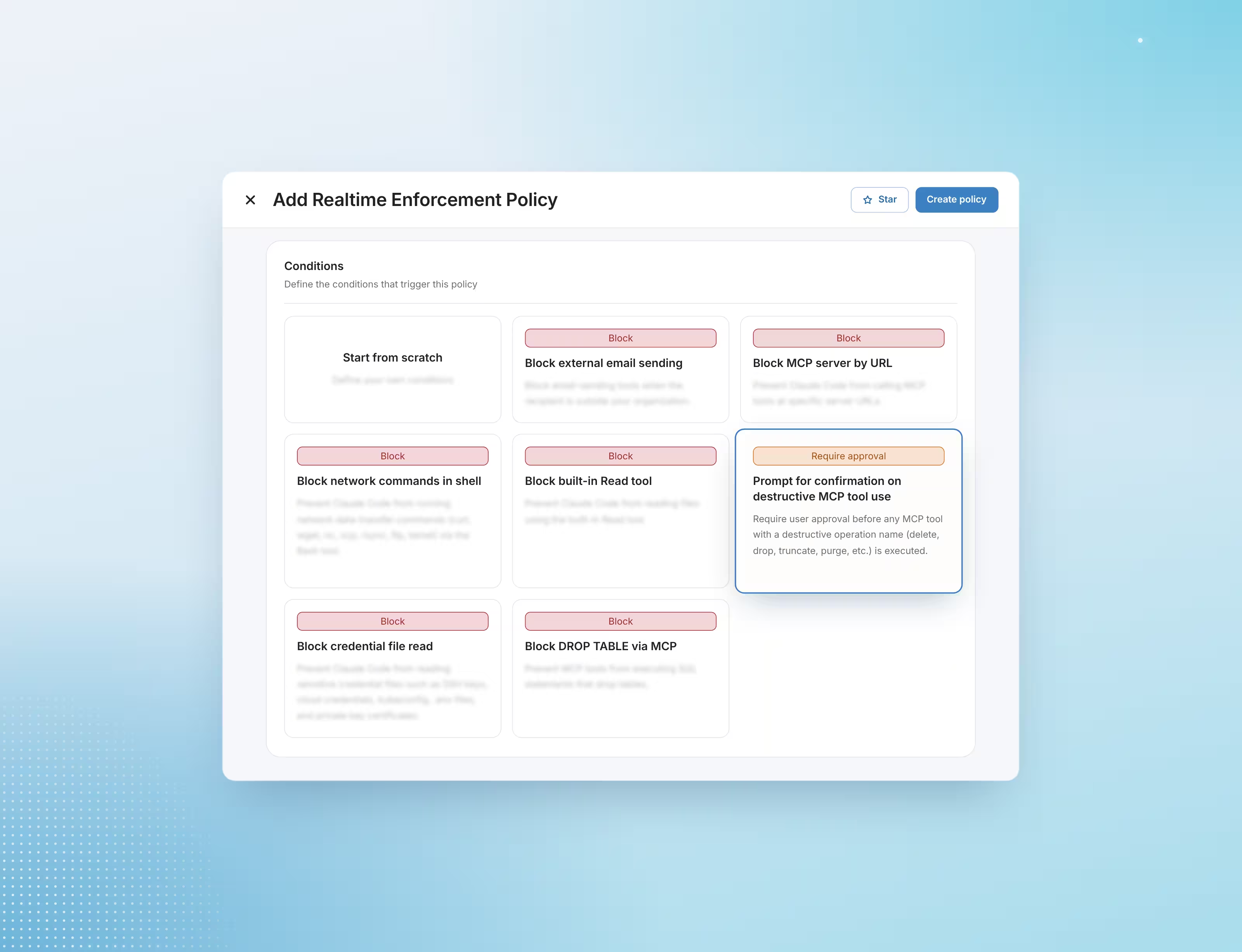
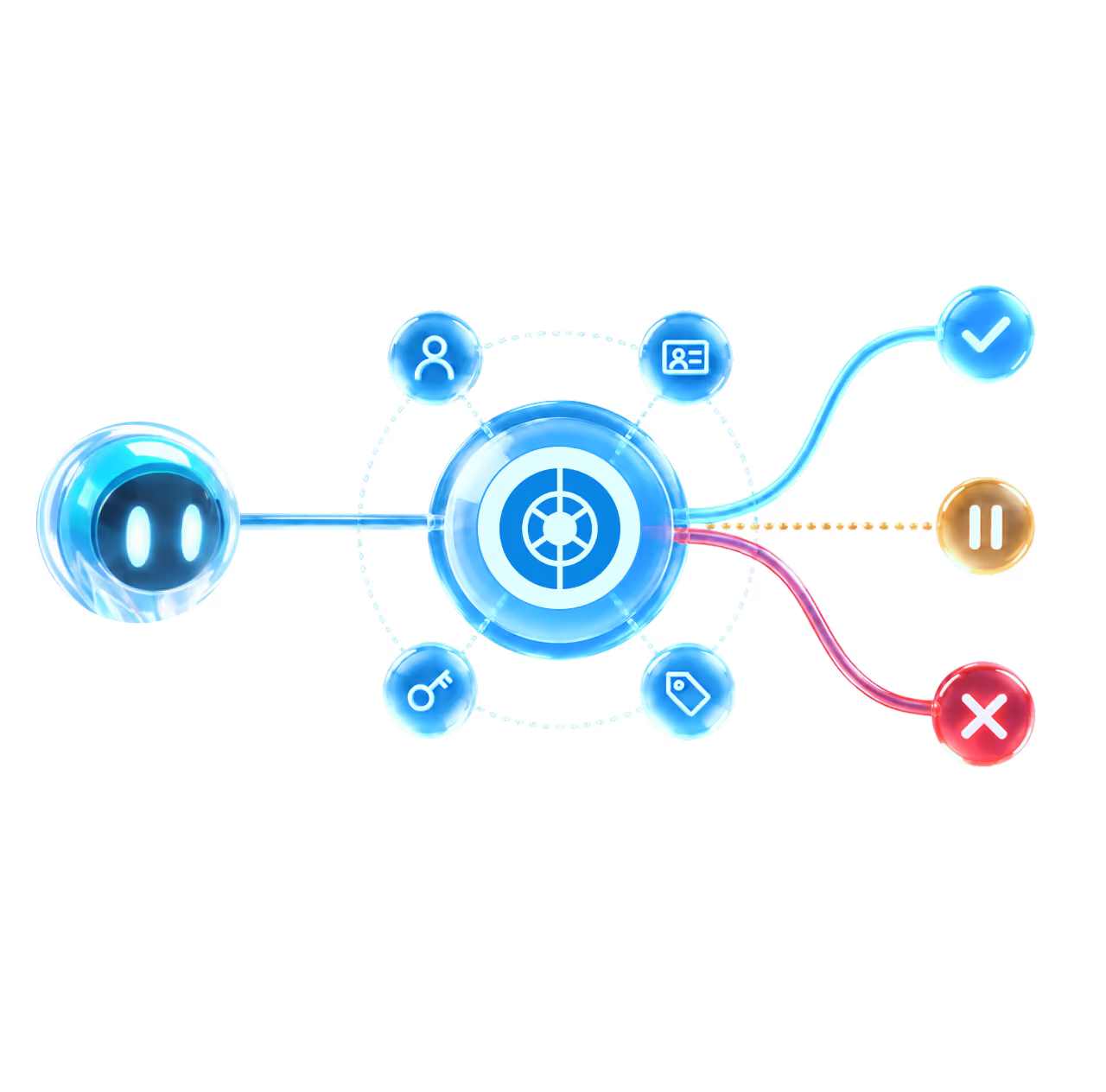
Read the announcementCentralize AI agent policy and enforce it at runtime across coding agents, agent platforms, MCP connections, and the gateways you already run. Each decision uses identity and HR context and your own data labels to allow an agent action, hold it for approval, or block it.
Each team picks its own agent tools, and each one gets its decision from the same policies before an agent’s action reaches your third-party apps.


True runtime security requires signals from both agents and the apps they act inside. Start where you are today, and add enterprise app context when you're ready to stop risks that neither source reveals alone.
Configuration reviews show what an agent is allowed to do, while runtime security evaluates what it is actually doing at execution time. This helps stop risky actions that are technically permitted but still unsafe or unintended.
The platform blocks high-risk, policy-violating executions before they complete. Examples include unexpected tool calls, suspicious data access spikes, malicious or misinterpreted prompts, and risky action chaining.
Yes. Policies can be set to either track or block executions based on your organization’s risk tolerance.
Every agent action can be evaluated against OWASP-aligned risk factors in real time. Webhooks can then be used to intercept high-risk executions before they complete.
Obsidian has support across platforms including n8n, Agentforce, Vertex, Copilot, Foundry, Bedrock, ChatGPT, Cursor, and Claude.
Agent data alone may miss risks that only become clear when correlated with SaaS and identity telemetry. The combined view helps reveal issues like sensitive data access across apps or privilege-related exposure behind an agent’s activity.
Obsidian continuously inventories agents, users, MCP servers, LLMs, owners, and connected tools in one place. This also includes visibility into AI-specific risk factors such as maker mode, org-wide access, public exposure, and stale or dormant connections.
Yes. Along with monitor and block, a policy can hold an action until a person approves it. Require approval is available today for Claude Code policies that run before an operation.
Yes. Codex agents get the same runtime policy enforcement, discovery, and risk analysis as Claude Code and Cowork agents, so you can manage policies for coding agents from both vendors in one console.
No. Your gateway or harness can request a decision from Obsidian through the Policy Decision API and enforce the allow, require approval, or block decision it receives.
Yes. You can supply your own context, such as data classification labels, so a policy like “block Highly Sensitive files for agents acting for someone outside the Executive team” follows your definition of sensitive data.
The Runtime Policy Decision Engine decides whether an AI agent action should run. The MCP Security Proxy is one of the places that decision is applied, for agents that reach third-party apps through MCP.