The expertise required to breach your organization just dropped significantly with the launch of Anthropic’s Claude Fable 5 Mythos-class AI model. Over the past two months, Anthropic and OpenAI have unveiled new frontier AI models that can fully automate offensive reconnaissance, SaaS intrusions, and data exfiltration through a single attack chain that no human attacker could orchestrate at the same speed or scale.
Anthropic's Mythos and OpenAI's GPT-5.5 models have proven so adept at finding and exploiting software vulnerabilities that both hyperscalers have launched security-focused initiatives to find and patch discovered issues before the models are broadly released. The only problem: the vulnerabilities Project Glasswing and Daybreak are finding is far more than any team can reasonably fix in time.
Mythos alone has identified 23,000 potential vulnerabilities across 1,000 open source projects. Only 75 with a critical or high severity rating have been patched, meaning security teams can no longer rely on vulnerabilities being too obscure, or vendors to patch their own gaps before they are discovered and exploited.
And for bad actors, gaining access via newly discovered security gaps is just the start. Due to the sprawling nature of modern cloud environments and the rise of AI agents, attackers can easily pivot into downstream systems through trusted integrations. That is how a single compromise to Salesloft-Drift impacted +700 connected Salesforce environments.
Now that every connected third-party app can be an entry point to your environment, your defenses have to evolve just as fast.
Modern enterprises have granted persistent, privileged access to hundreds of SaaS vendors. As JPMorganChase CISO Patrick Opet warned: "an attack on one major SaaS or PaaS provider can immediately ripple through its customers."
Past campaigns like the Salesloft and then Gainsight breaches have shown this to be true. More recently in April 2026, Vercel disclosed a security incident where customer API keys and proprietary source code were stolen not through a direct compromise of Vercel's infrastructure, but through a compromised third-party tool integrated into corporate accounts.
In every instance, a vendor integration is how victim data was compromised. So as secure as your own environment is, one weak third-party application is all it takes for attackers to break in. And with the proliferation of vibe-coded apps, AI agents, and embedded AI copilots all using the same OAuth connection architecture as traditional SaaS, the size and complexity of your environment is expanding faster than most security teams can inventory, govern, or secure.
Frontier AI models have collapsed the timeline of these supply chain threats. Attackers can now outsource the expertise required to orchestrate these types of breaches, effectively eliminating the time needed to find unsecured entry points across your maze of app-to-app integrations. Static defenses are no match for models that never turn off.
Vendor risk is no longer a problem that can be solved with annual third-party risk management assessments. It is a living attack surface that changes every time an employee connects a new tool, authorizes an OAuth app, or creates an API token outside of IT's view. Security teams need instant and continuous answers to four questions:
Current tooling can't answer any of these in real time. CASB and DLP see user-to-SaaS interactions but are blind to cross-SaaS lateral movement via APIs and OAuth. Endpoint and network controls can't see token-based access that looks entirely legitimate at the system level. Periodic reviews capture a snapshot of a surface that has already changed by the time the report is written.
When an active attack is unfolding, piecing this picture together across your existing tools takes too long. A dedicated solution for SaaS supply chain security needs to be just as fast.
Obsidian Security acts not as an extension of your endpoint or network platform, but as a purpose-built control plane for your enterprise application and AI attack surface. The platform constantly monitors and defends the interconnected web of OAuth grants, API integrations, service accounts, and automation tokens through which enterprise data moves.
Each of the four questions security teams can't answer today? Obsidian answers them continuously.
Each new AI agent and SaaS integration introduces another layer of trusted access across your environment. The result is a sprawling network of OAuth grants, APIs, service accounts, and non-human identities that most security teams can't fully see, let alone secure.
Obsidian maps the complete network of connections between SaaS apps, AI agents, and third-party services, exposing the hidden access paths attackers use to move laterally and reach sensitive data. Every integration is automatically inventoried, classified, and prioritized by risk, giving security teams the visibility they need to reduce their attack surface and remediate exposures before attackers, or the next generation of AI-powered reconnaissance tools, find them first.
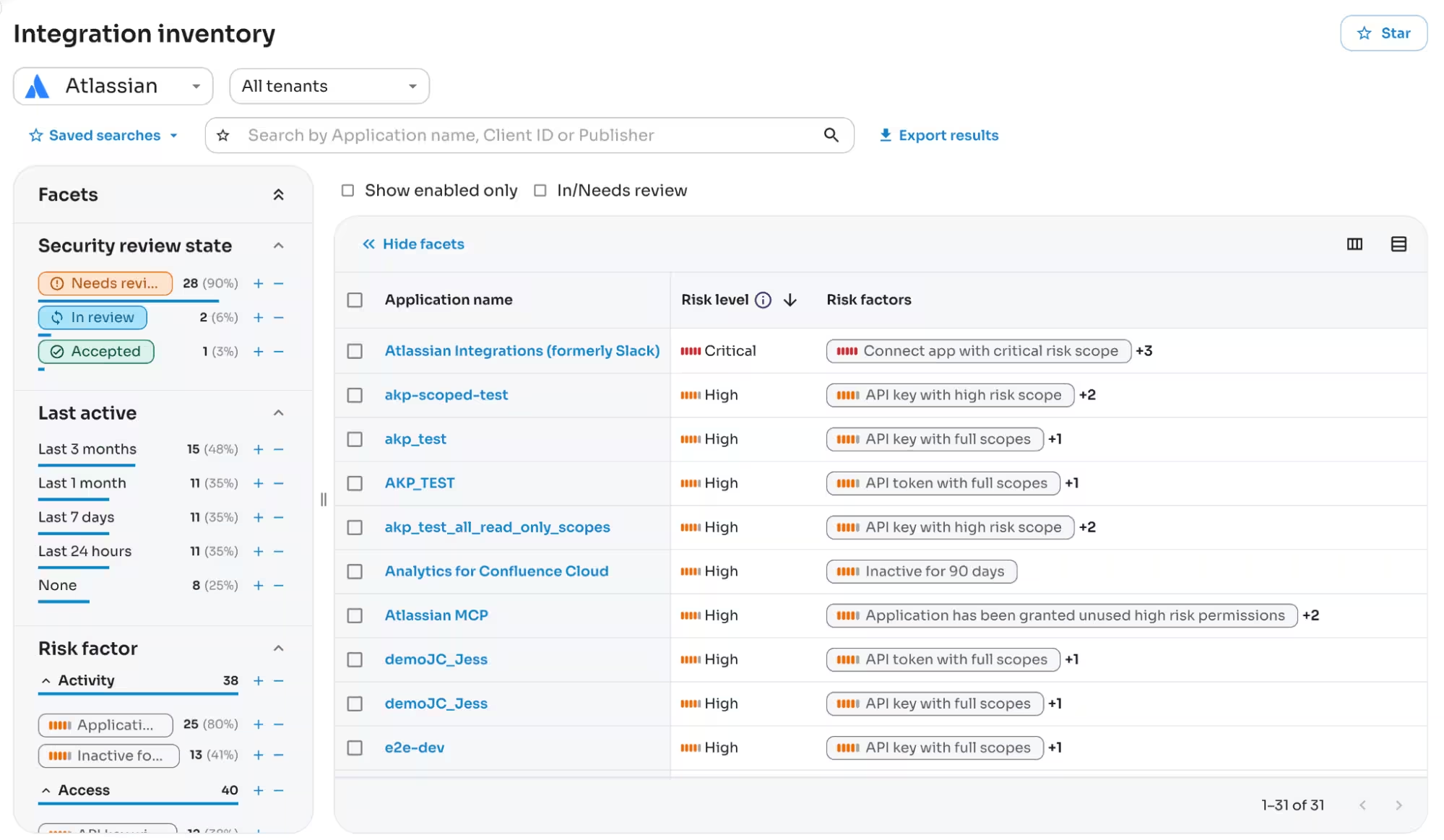
A compromised vendor is no longer an isolated incident. As AI agents and SaaS applications gain broader, privileged access across interconnected systems, a single credential compromise or stolen token can become a gateway to every app, dataset, and tenant that account can reach.
Obsidian visualizes the full blast radius of every vendor and integration, showing security teams exactly which systems, data, and downstream applications are exposed. When an incident occurs, teams don't waste time tracing access paths across logs and disconnected tools. They can instantly assess impact, revoke access, and contain threats before attackers move deeper into their environment.
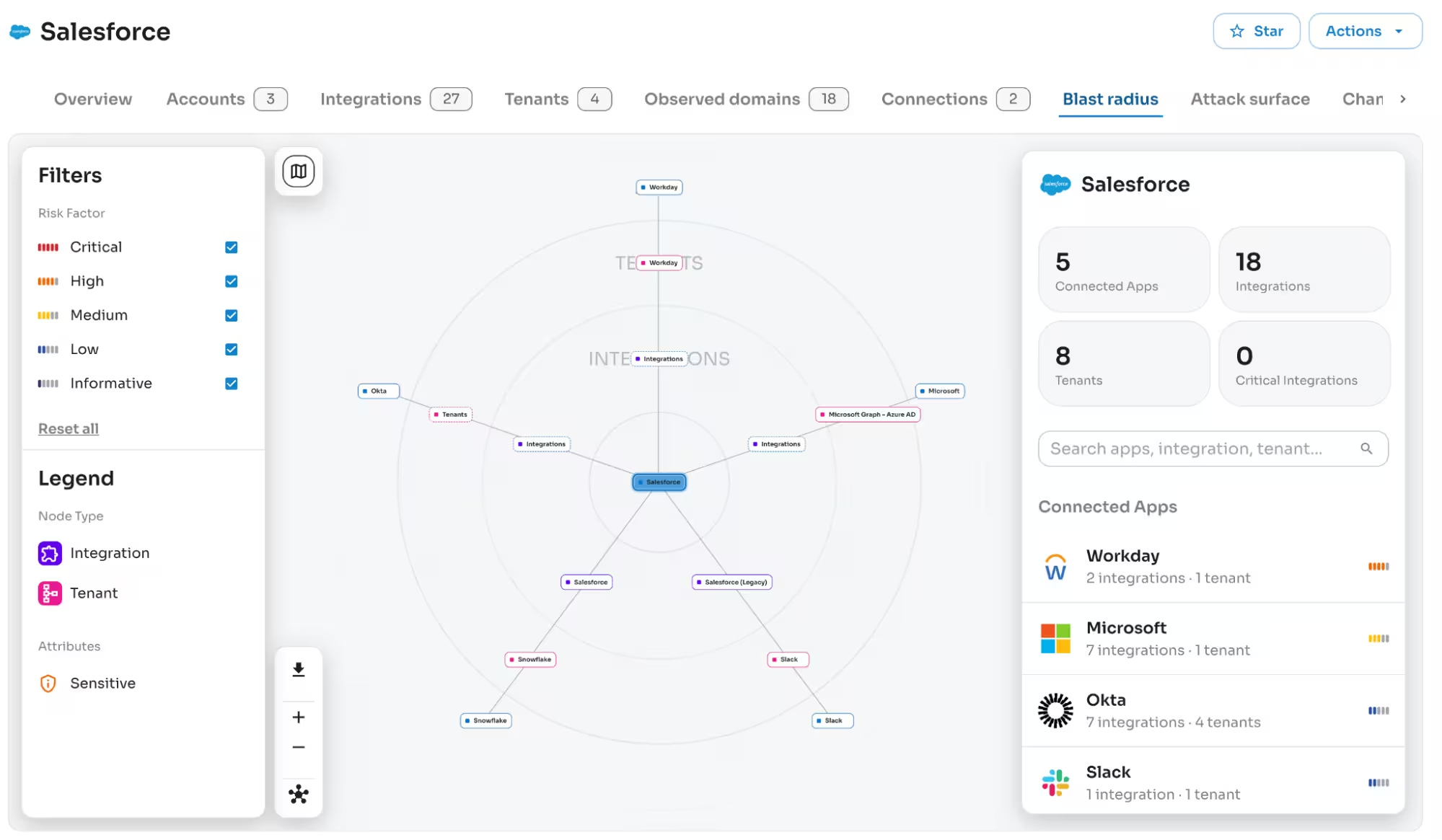
Security teams are already stretched thin. Chasing point-in-time assessments, maintaining outdated spreadsheets, and manually tracking newly connected applications makes it nearly impossible to keep pace with an expanding attack surface. As AI agents gain the ability to read, write, and autonomously move data across systems, the challenge only grows.
Obsidian replaces manual reviews with real-time identity, activity, and access intelligence across SaaS and AI agents. By continuously analyzing how integrations interact with data, users, and connected systems, Obsidian identifies excessive permissions and uncovers stale integrations that can be safely removed. The result is a smaller attack surface, stronger least-privilege enforcement, and fewer opportunities for a compromised vendor or AI agent to trigger a cascading breach.
.avif)
Modern attacks rarely stay confined to a single application. As frontier AI models make reconnaissance, exploitation, and lateral movement faster and more autonomous, the ability to quickly detect and contain a breach is becoming a business imperative. Security teams can no longer afford investigations that require manually stitching together logs, identities, permissions, and activity across dozens of applications just to understand what happened and what's at risk.
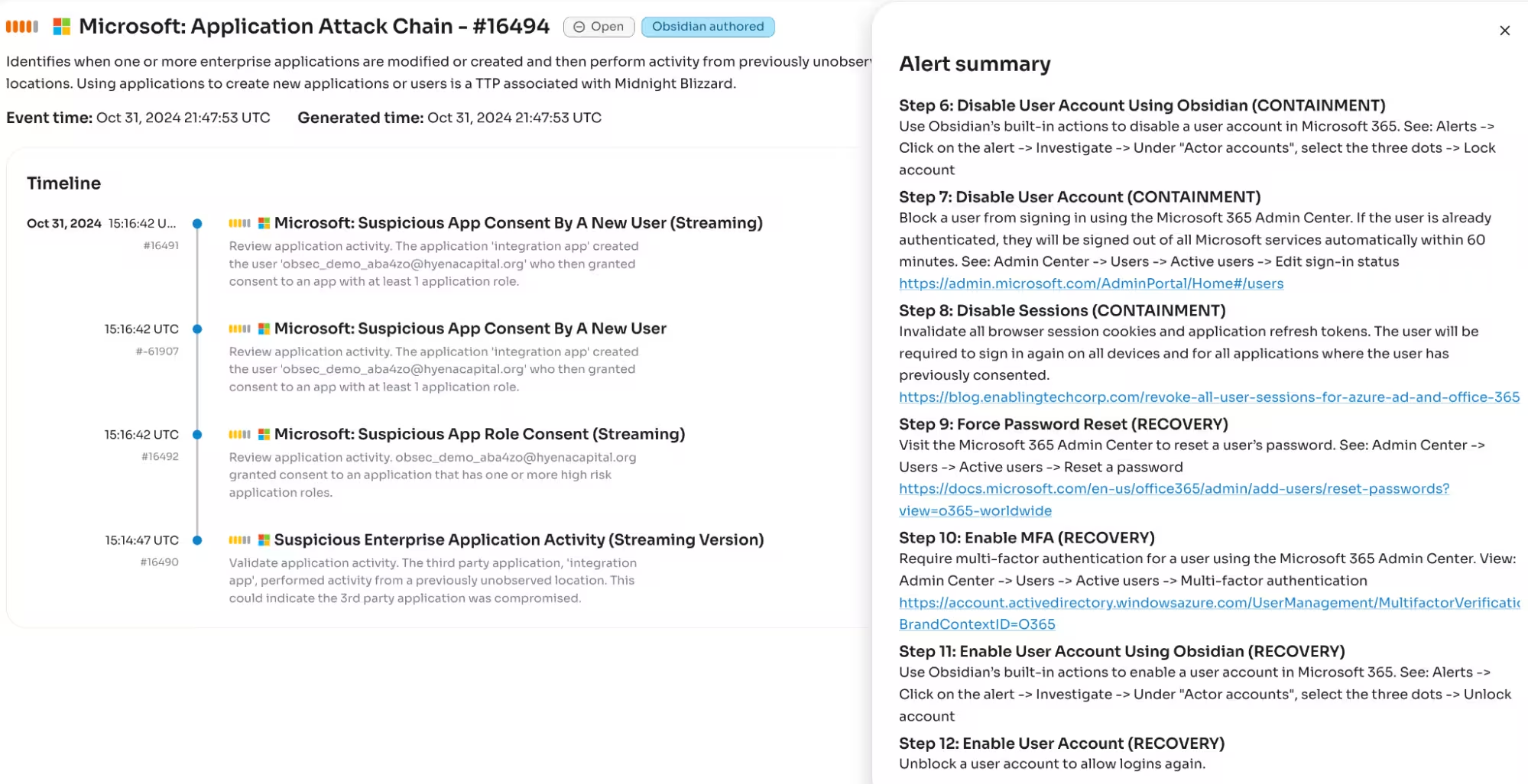
Obsidian gives security teams immediate visibility into the impact of a supply chain attack and the actions needed to contain it. When an incident occurs, teams can instantly see the attack path in a unified timeline. With complete context and visibility into downstream exposure, they can rapidly assess impact, revoke access, contain threats, and stop attackers before they move deeper into the environment.
Anthropic's Project Glasswing and OpenAI's Daybreak initiative confirm what the vulnerability numbers already show: these models are serious risks. And their broad release is already here.
The organizations that contain supply chain incidents most effectively will be those with continuous integration visibility already in place. Not those assembling the picture after a breach notification arrives.
Don't wait for a vendor’s breach notification to discover your blast radius. Get end-to-end security across your full supply chain with Obsidian.

In the wake of the Salesloft breach, we’re offering a free risk assessment of your Salesforce environment to help identify potential exposure. Click here to request yours.
Take a breather! In under 6 minutes, our demo breaks down the risks AI agents bring to your SaaS environment and how you can get ahead of them.
We're offering a free AI agent risk assessment—check it out.
The biggest SaaS breach of 2025 started with a compromised third-party app. Attackers then exploited Salesloft-Drift OAuth tokens, which granted them access to hundreds of downstream environments. Obsidian researchers found the blast radius of this supply chain attack was 10x greater than previous incidents, where attackers infiltrated Salesforce directly.

Start in minutes and secure your critical SaaS applications with continuous monitoring and data-driven insights.